Tier
Budget
№ 01
Best overall
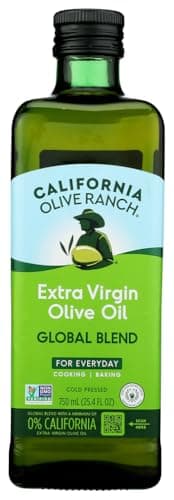
California Olive Ranch Everyday EVOO
California Olive Ranch
This is the bottle that lives within arm's reach of my stove, and it has been for years. It is grassy and a little peppery without being a statement, which means it works for a salad dressing at noon and a sizzling pan of chicken thighs at six. The label carries a harvest date, which is the single most honest thing an olive oil bottle can do, and I can replace it at any grocery store in Minneapolis without a detour.
What I love
- Harvest date printed right on the label
- Balanced medium flavor that cooks and finishes equally well
- Available in practically every American grocery store
- Dark bottle protects the oil from light
Worth knowing
- The Everyday line blends oils from several countries; the 100% California line costs more
- Too polite for people who want a bold, throat-catching oil
Best for
The default bottle. Anyone who wants one good oil that does everything without fuss.